
DDinesh Kumar Khara is someone who cares for others's ideas and suggestions.
If he takes the people along with him (which he always does); cares for the customers (80 per cent of SBI's new customers are in the 20-40 age group); and doesn't take his eyes off technology, his job is done, says Tamal Bandyopadhyay.

With strong long-term fundamentals, banking sector cannot be completely ignored

One thing is for sure: It smacks of the regulator's lack of confidence in the bank's board, points out Tamal Bandyopadhyay.

2006 has been the year of the winners. Almost all asset classes have performed well. CNBC Awaaz spoke to a mix of experts to understand what kept the market moving.
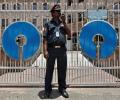
B Sriram, the senior-most managing director at SBI, along with fellow MDs Rajnish Kumar, P K Gupta, and Dinesh Kumar Khara had been interviewed for the post

Enjoying the backing of the regulator, Gill has identified the core problems, ring-fenced the banks from "influencers" and is in the process of building a new team. Now, he needs to play a Vikram Pandit for YES Bank, says Tamal Bandyopadhyay.
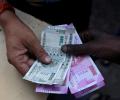
PSBs dominate India's banking system, meaning any failure could jeopardise financial stability, as such, we expect government support will remain forthcoming, said Moody's.

Non-performing assets of banks have been on the rise for past several months due to slowdown in the economy.
The bank expects to grow loan book by 10 per cent in the current financial year with calibrated exposure to corporate accounts and thrust on the retail segment.

Indeed, there were frauds, and the politician-banker-industrialist nexus played a role in the rise of NPAs, but governance issues in Indian banking are far more nuanced and complex, reveals Tamal Bandyopadhyay.

Like everything else, the structure of banks may change, and banks may depend more on digital technologies and artificial intelligence for dealing with both their customers and employees.

The country's largest private lender HDFC Bank's bad-loan write-offs doubled to Rs 3,100 crore in the April-June quarter (first quarter, or Q1) of 2021-22 (FY22), from the level of Rs 1,500 crore in the same quarter of 2020-21 (Q1FY21). It also offloaded its non-performing assets (NPAs) amounting to Rs 1,800 crore in Q1FY22 to maintain a robust asset quality profile. It had jettisoned NPAs worth Rs 1,000 crore in the last quarter. Lenders knock off stress assets from books after making full provisions. Their right to recover dues from delinquent borrowers remains intact after the write-downs.
HDFC Bank Q4 review: HDFC Bank's January-March quarter (Q4) results, for financial year 2022-23 (FY23), brought no cheer to investors as elevated costs, and merger-related uncertainties continue to dent the sentiment. Moreover, analysts fear that merger-related costs may put pressure on margins and cost to income ratio in the near-term, while the return on equity could moderate owing to low leverage of the parent. Analysts, therefore, opine that the stock's re-rating may be some time away. "While the risk of a de-rating on a standalone basis appears to be quite low given that the business performance is holding up well, we believe a re-rating in the stock would happen as and when more clarity emerges on the smooth transition (merger)," said a report by Sharekhan.

For the fiscal ended 2021, the group has made a loss of Rs 5,943 crore on sales of Rs 11,723 crore, a drop of 66 per cent over fiscal 2020. The group's total debt was up by 7 per cent to Rs 20,742 crore.

The banking sector in India is reeling under Rs 8 lakh crore of non performing assets (NPAs) or bad loans, of which PSU banks alone account for over Rs 6 lakh crore.
Public sector banks' need for capital should be used to make fundamental reforms to their governance and management.

Lenders had filed 1,251 cases to recover Rs 24,765.5 crore. Wilful defaulters are the entities that do not pay back money despite the ability to do so. Defaulters above Rs 1 crore were considered for this exercise.

'The financial sector's performance in the first two quarters was a revelation.' 'It clearly showed the clean-up had been done in the past one-and-a-half years and that capital brought in was significantly stronger.'

S.Kumars chief Nitin Kasliwal is charged with non-performance by company shareholders in the recently help AGM of the company.

In addition, he will have to move swiftly to control any damage that may have been caused to the bank's image and investor confidence due to the loan controversy

Why can't we have a sunset clause for the ARCs, which is a global norm? questions Tamal Bandyopadhyay.

The Reserve Bank of India (RBI) on Wednesday announced to increase the policy repo rate by 50 basis points to 4.9 per cent, the second hike in five weeks aimed at quelling the inflation. The MPC vote was unanimous and has decided to keep stance withdrawal from accommodative, RBI Governor Shaktikanta Das said in a press conference on Wednesday. The decision was taken during a three-day meeting of the RBI's Monetary Policy Committee (MPC) to review the interest rates in the country. The MPC voted unanimously to increase the policy repo rate by 50 bps to 4.90 per cent," Das said.

In the same quarter a year before, most of them had reported a dismal performance.

Private equity investments in Indian companies grew 38 per cent to $62.2 billion last year, with inflows into Reliance Industries' telecom and retail ventures contributing nearly 40 per cent of the total value of the deals, a report said on Wednesday. Barring investments into Jio Platforms and Reliance Retail, the total deal value was down by 20 per cent over 2019 as the volume of large deals of more than $100 million dipped by a fourth, as per the report by Bain & Company and India Venture Capital Association. Overall investment activity remained muted from March to May last year due to COVID-led uncertainties and investor confidence recovered strongly in the second half to pre-COVID levels with late-stage and buyout deals witnessing increased traction, it said.

ICICI Bank, HDFC Bank and Axis Bank reported healthy loan growth and asset quality.

'But we are much better than what we all had expected and planned, and what all the prophets of doom had predicted.'

What connects P S Jayakumar of Bank of Baroda, V Vaidyanathan of Capital First Ltd and Chandra Shekhar Ghosh of Bandhan?

The stimulus measures include extension of the 90-day moratorium on recognition of impaired loans to 180 days, in addition to several relaxations in bank lending limits, including allowing banks to fund interest on working capital loans.
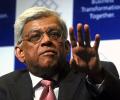
The chairman of mortgage giant HDFC Ltd in his annual letter to shareholders, also suggested a one-time restructuring of real estate loans, easing of external commercial borrowing rules and immediate changes in regulations to allow end-to-end execution of housing loans online.

If customers did not see value in what we provide them at the price point at which we provide these, they would not have been there with us in such a competitive market, says HDFC deputy managing director Paresh Sukthankar.

'The Indian economy and the Indian financial sector today remain resilient and much better placed.'

Microfinance portfolio of SFBs saw a muted growth of about 3% last year
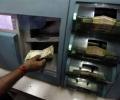
Recent rates cuts by most banks may not have a significant impact on margins, say analysts.

The government kept its nerve in the face of a massive shock. It chose not to resort to a massive fiscal stimulus. It focused instead on providing liquidity support and easing restrictions on movement in stages, observes T T Ram Mohan.
Shares of most European banks are down significantly.

The newly-appointed chairman of State Bank of India (SBI) Dinesh Khara on Wednesday said maintaining quality loan book, safety of employees and customers will remain his top most priorities. Khara, who took charge on Wednesday, said the bank will continue to strive for even better customer experience.

Banks feel happy shifting their toxic assets from loan books to investment books while the ARCs enjoy the management fees with a smile, observes Tamal Bandyopadhyay.

'It really doesn't matter that investors getting allotments sell their IPO stock holdings on listing day because a new set of investors are entering.' 'This explains the continued rise in stock prices even after the first day of listing.'

This pertains to certain irregularities in loan disbursements towards the development of two Slum Rehabilitation Authority projects undertaken by the company in the past.
About 50 per cent of the accounts that availed of the EMI moratorium amid the pandemic, which made things worse in an already slowing economy, are expected to be restructured, and of these accounts that would undergo restructuring, one-third, or Rs 6-9 trillion, could turn into NPAs.
